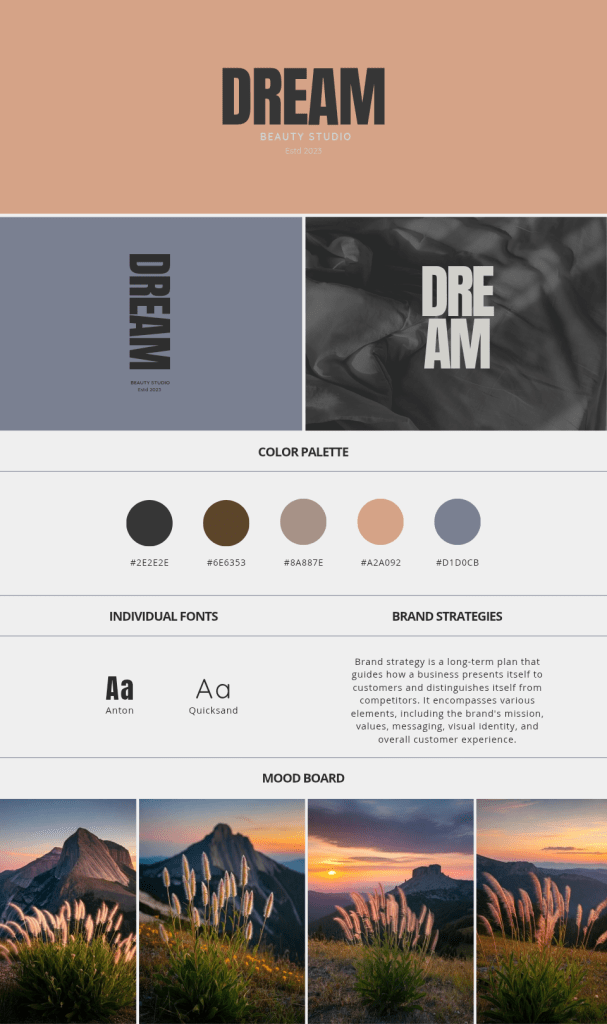
A strong brand strategy helps businesses build brand awareness, equity, and loyalty by creating a clear and consistent brand image across all touchpoints.
In the bustling marketplace of today, a strong brand voice is no longer a luxury but a necessity. It’s the unique personality that sets you apart from the competition, forging a connection with your audience and fostering lasting relationships. But how do you go from a vague idea to a clearly defined brand voice that resonates? This guide provides practical steps to help you craft a voice that truly speaks to your target audience.
Know Thyself
Define Your Brand Identity
Before you can project your voice, you need to understand who you are. What are your core values? What is your mission? What makes you different? Answering these questions will lay the foundation for an authentic brand voice.Identify your core valuesWhat principles guide your business decisions? (e.g., sustainability, innovation, customer-centricity)Define your missionWhat purpose does your brand serve? What problems do you solve?Pinpoint your unique selling proposition (USP)What differentiates you from the competition? What unique value do you offer?
Listen to Your Audience
Understanding your target audience is crucial. Who are they? What are their interests, needs, and pain points? What kind of language do they use? Researching and analyzing your audience will help you tailor your voice to resonate with them.
Conduct market research: Use surveys, focus groups, and social media listening to gather insights.
Analyze your existing customer base: Study their demographics, behaviors, and preferences.
Explore online communities and forums: Understand how your target audience communicates and the language they use.
Find Your Tone
If your brand were a person, how would they speak? Would they be formal or informal? Playful or serious? Choosing the right tone is crucial for creating the desired emotional connection.
Consider your industry and target audience: A law firm might adopt a formal and authoritative tone, while a trendy clothing brand might opt for something more casual and playful.
Use adjectives to describe your desired tone: Examples: friendly, informative, humorous, sophisticated, empowering.
Create a brand voice chart: This visual tool can help maintain consistency by outlining different tones for various situations (e.g., customer service interactions, social media posts).
- The Bridge Home: A Story of Shared ParenthoodFor years, my parent advocacy work has shown me a painful truth: our child welfare system, while built on good intentions, often feels more like a threat than a support. It’s a system… Read more: The Bridge Home: A Story of Shared Parenthood
- A Strategic Framework for High-Impact Partnership Outreach: Crafting the Collaborative EmailThe Strategic Blueprint for Partnership Outreach The contemporary business landscape necessitates a paradigm shift in how organizations initiate new relationships. The traditional “cold pitch” is now widely perceived as an obsolete and often… Read more: A Strategic Framework for High-Impact Partnership Outreach: Crafting the Collaborative Email
- From People-Pleasing to Peacekeeping: My Journey into Boundary SettingI used to think setting boundaries meant being rude, selfish, or dramatic. Whenever I felt uncomfortable or disrespected, I questioned myself instead of speaking up. I worried about being “too much,” hurting someone’s… Read more: From People-Pleasing to Peacekeeping: My Journey into Boundary Setting
Choose Your Words
The language you use plays a significant role in shaping your brand voice.
Are you going to use industry jargon or simple, everyday language?
Will you use humor or stick to straightforward communication?
Develop a glossary of preferred terms.
This ensures consistency across all communication channels.
Consider the rhythm and cadence of your language.
Short, punchy sentences create a different feel than long, flowing ones.
Pay attention to your use of active and passive voice.
Active voice generally creates a more direct and engaging tone.
Bring it to Life
Implement and Refine
Once you’ve defined your brand voice, it’s time to put it into action! Apply it consistently across all your communication channels, from your website and social media to your marketing materials and customer service interactions.
Develop a style guide.
This document should outline all aspects of your brand voice, providing clear guidelines for anyone creating content for your brand.
Train your team.
Ensure everyone understands and embraces the brand voice.
Monitor and analyze.
Regularly review your content and gather feedback to see how your audience is responding. Refine your voice as needed to ensure it stays relevant and effective.
Creating a unique brand voice is an ongoing journey, not a one-time task. By consistently applying these steps and remaining adaptable, you can cultivate a voice that truly resonates with your audience, builds strong relationships, and drives business success.
 Lived Xperience
Leave a comment